Daniel Pederson
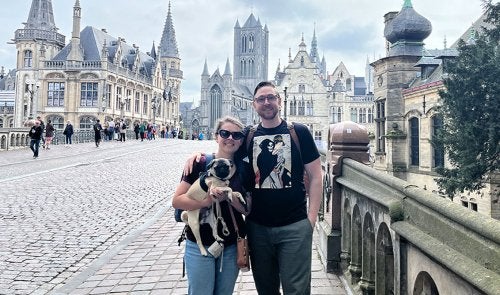
Don’t turn applying to Norwich into a three-foot wall. You’re capable. You have the resources. These people are willing to help you get there.
In the Room Where Decisions Are Made
After a career in the infantry and a transition into federal service, Daniel Pedersen is preparing for what comes next.
Daniel Pedersen has already lived several careers.
He served as an infantry officer in the U.S. Army, led Soldiers through the height of the Global War on Terrorism, supported Operation Allies Welcome during the fall of Kabul, transitioned into the private sector after leaving active duty, and eventually found himself working overseas in Germany supporting the Department of the Army as a federal employee.
But even after years of leadership experience, operational planning, and military service, Pedersen still felt drawn toward something more.
“I want to be in the room when the big decisions are being made,” Pedersen said.
That mindset ultimately led him to Norwich University and the university’s Master of Arts in Strategic Studies program, where he found an academic environment that connected directly to both his military background and his future aspirations in national security and federal service.
Now preparing to graduate while living and working in Germany, Pedersen says the experience has expanded not only how he thinks about strategy and conflict, but also where he believes his career could lead next.
From South Dallas to the Infantry
Pedersen grew up primarily in South Dallas in a military family with generations of service behind him. As the wars in Iraq and Afghanistan intensified during the early years of the Global War on Terrorism, he felt drawn toward military service himself.
“I was coming out of high school and into college around the time that the Global War on Terrorism was really starting to pick up,” Pedersen said.
He joined Army ROTC while attending the University of North Texas, where he earned his undergraduate degree in international relations before commissioning as an infantry officer in the Army.

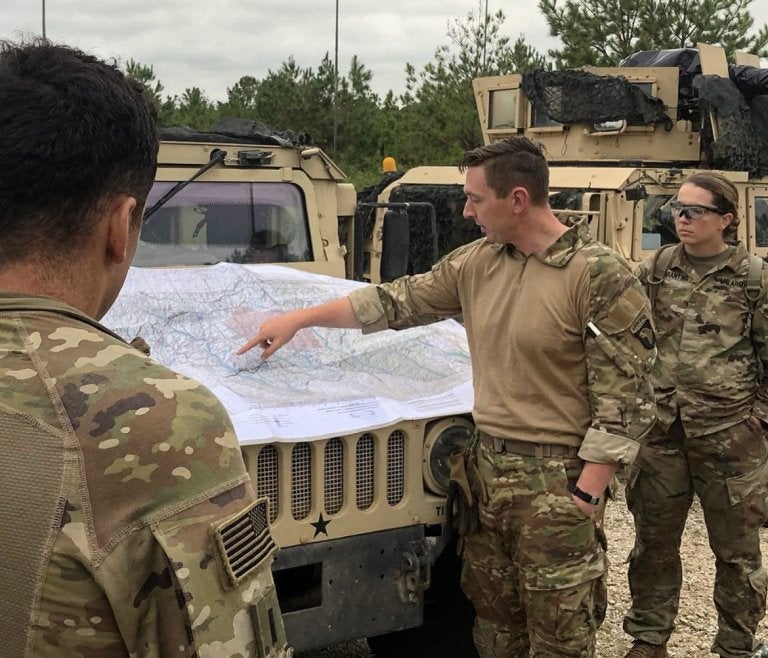
Over the course of his military career, Pedersen held a wide range of leadership positions and operational assignments, eventually reaching his third command assignment with the 101st Airborne Division.
One of the defining moments of his career came during Operation Allies Welcome, the military support operation connected to the withdrawal from Afghanistan and evacuation efforts following the fall of Kabul in 2021.
After years in the infantry, however, Pedersen began reassessing what he wanted from the next phase of his life and career.
“I could stay in a peacetime Army and focus on the next level of being an infantry officer,” he said. “But I’d leave behind a lot of the things that made the career so meaningful.”
Rather than continue climbing the traditional active-duty path toward battalion command and staff assignments, Pedersen decided to transition out of active military service and explore opportunities elsewhere.
A New Mission in Germany
After leaving active duty, Pedersen spent two years working in the technology sector at Oracle. While he respected the people he worked alongside, he quickly realized the corporate environment was not the right fit.
“The values just didn’t sit right with me,” Pedersen said. “I needed to give my time and energy to something bigger than just making rich people richer.”
That realization eventually led him back toward public service.
Today, Pedersen works for U.S. Army Garrison Rheinland-Pfalz in Kaiserslautern, Germany, where he currently serves as the garrison’s emergency manager. He also returned to military service as a reservist, continuing to serve in the infantry while supporting Army operations overseas.
The move back into federal service immediately felt more aligned with both his experience and personal values.
“A lot of the skill sets I learned as an Army officer transitioned directly into working for the Department of the Army as a federal employee,” Pedersen said.
At the same time, he began looking for a graduate program that would help him continue growing professionally while sharpening his understanding of strategy, policy, and national security.
Why Norwich
The recommendation that ultimately pointed him toward Norwich came from a close friend and fellow Army officer who had completed both undergraduate and graduate degrees through Norwich University.
“He’s my buddy that I probably talk politics and strategy with more than anybody else,” Pedersen said. “He knew exactly where some of my passions were.”
Pedersen explored several graduate programs before making a decision, but Norwich consistently stood apart.
Part of that came from the university’s military-friendly environment and flexibility for working professionals. Another major factor was the level of personal support he received during the admissions process.
“It was intimidating stepping back into a civilian university setting after being out of school since 2013,” Pedersen said.
But Norwich’s recruiting staff and advisors helped ease that transition immediately.
Pedersen specifically credits his advisor, Bethany Reynolds, for helping him navigate major life changes while beginning the program, including an overseas move to Germany shortly before his initial start date.
“She said, ‘Maybe we should push your start date back a semester,’” Pedersen recalled. “She told me, ‘I don’t want your first class to be a stressful experience. I want you to have a good experience.’”
That interaction left a lasting impression.
“It never felt like they were just trying to put bodies in classrooms,” he said. “It genuinely felt like they wanted me to succeed.”
Studying Strategy in a Changing World
Now nearing completion of the Strategic Studies program, Pedersen says one of the biggest strengths of the curriculum has been how intentionally it builds upon both historical and modern strategic thinking.
As someone with an undergraduate background in international relations, he appreciated how the coursework revisited foundational concepts before progressively diving deeper into military theory, strategic evolution, and policymaking.
“I really appreciated how much the program touched on history,” Pedersen said. “It felt like the course was following the evolution of strategy historically, but also through ideas and theories over time.”
That historical perspective became especially valuable while studying modern conflict and emerging forms of warfare.
One course in particular, Information Warfare taught by Dr. Diane Zorri, had an immediate impact on how Pedersen approached his work in Germany.
Working within the emergency management and protection environment in Europe, Pedersen operates in a region directly affected by ongoing tensions connected to the war in Ukraine and NATO’s eastern flank.
“You can feel it here in Europe,” Pedersen said. “There’s a common understanding that Ukraine is fighting a fight all of Europe is invested in.”
The coursework surrounding information warfare, cyber threats, and modern operational planning directly influenced conversations and exercises he now helps support professionally.
“I realized cyber warfare isn’t some nebulous tech thing beyond understanding,” Pedersen said. “It’s the new frontier and we need to figure it out.”
That shift in mindset helped him feel more comfortable engaging with cybersecurity planning, operational preparedness, and emerging technologies impacting both military and civilian infrastructure.
“Not every general in World War II understood exactly how airplanes worked,” Pedersen said. “But they understood they needed to know how to apply them.”
Learning Alongside Military Professionals
Throughout the program, Pedersen also found value in the diversity of perspectives within the classroom.
His classmates included active-duty officers, reservists, veterans, federal employees, and younger students transitioning directly from undergraduate programs into graduate education.
The result, he says, created an environment where students could openly challenge ideas, debate policy concepts, and explore strategic questions without conversations becoming hostile or dismissive.
“It’s felt like a safe place to go a little off-script and really explore ideas,” Pedersen said.
Rather than trying to “win” arguments, students approached discussions collaboratively, helping each other identify blind spots, alternative viewpoints, and different strategic considerations.
“Everything came from a place of respect,” he said.
That collaborative atmosphere became especially important given the complexity of many of the topics discussed throughout the program, ranging from geopolitical competition and NATO strategy to hybrid warfare, cyber threats, and emerging technologies.
Preparing for What Comes Next
Pedersen is now preparing to complete his final course, a hybrid warfare immersion experience in Berlin led by Dr. Diane Zorri.
Living in Germany has made the opportunity particularly meaningful, allowing him to study strategic and security issues in a region directly connected to many of today’s most significant geopolitical challenges.
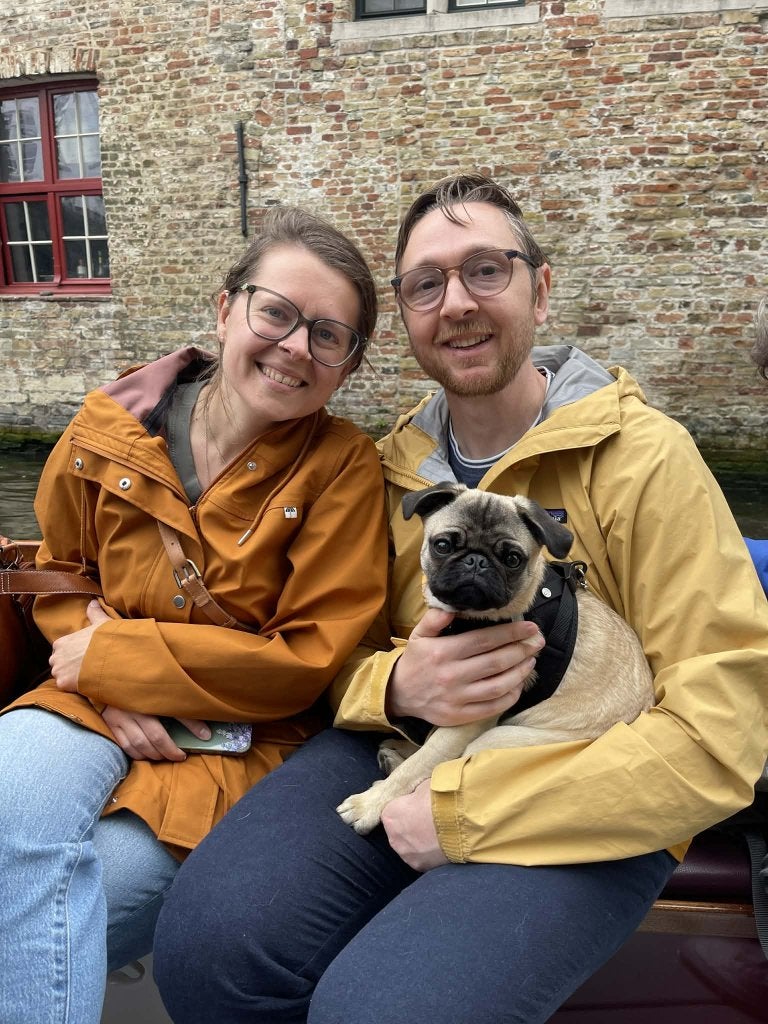
Looking ahead, Pedersen hopes to continue building a career within federal service while positioning himself for future roles connected to policy, national security, and strategic decision-making.
“I want to find a place where I can be in the room when the big decisions are getting made,” he said.
Whether that ultimately leads to Washington, D.C., the National Security Council, or another leadership role within federal service remains to be seen. But he believes Norwich’s Strategic Studies program has already helped sharpen the way he approaches complex global issues and strategic planning.
For other veterans and service members considering graduate school, Pedersen encourages them not to overcomplicate the process or underestimate themselves.
“Don’t turn applying to Norwich into a three-foot wall,” he said. “You’re capable. You have the resources. These people are willing to help you get there.”
For Pedersen, graduate education became more than simply earning another credential. It became another step toward continuing a life built around service, leadership, and preparing for whatever challenge comes next.