David Santos
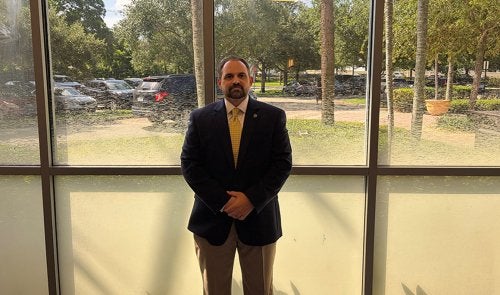
As an undergrad, my bucket-list goal was always to eventually earn a master’s and PhD in history.
What Military History Still Teaches Us
David Santos entered the Army with the same understanding of war many young officers carry with them: a deep respect for military service shaped by years of studying history.
Growing up near United States Military Academy in New York’s Hudson Valley, Santos spent much of his early life immersed in military history. He read extensively about World War II, Vietnam, and the broader history of conflict and leadership long before eventually attending The Citadel and commissioning as an Army officer through ROTC.
Then came Iraq.
“You realize there’s a lot more hardship behind the romanticized version of war,” Santos said.
That realization fundamentally changed the way he viewed leadership, military service, and history itself.
Now, years after retiring from the Army as both an infantry and intelligence officer, Santos is pursuing his second graduate degree through Norwich University while leading a 40-person crime analysis unit for a sheriff’s office in Florida.
For Santos, military history is not simply about studying battles or memorizing dates. It is about understanding people, leadership, decision-making, and recurring patterns that continue shaping the modern world.
Learning Leadership Beyond Rank
Santos commissioned into the Army before 9/11 and initially entered what was still considered a peacetime military environment. Following the attacks and his eventual deployment to Iraq, however, his understanding of leadership and service evolved quickly.
Over time, he transitioned from the infantry into military intelligence, serving the majority of his career as an intelligence officer. Along the way, he encountered leaders who inspired confidence and others who taught equally valuable lessons through failure.
“You quickly learn that rank doesn’t automatically mean someone understands leadership,” Santos said.
That lesson became one of the defining ideas shaping both his military and civilian career.
Rather than viewing leadership purely through authority or positional power, Santos developed a leadership style centered on accountability, empathy, professionalism, and mission focus. He believes some of the most important lessons leaders learn come from observing what not to do.
“You can learn something from everybody,” he said.
“Sometimes it’s what kind of leader you want to be, and sometimes it’s what kind of leader you don’t want to be.”
Today, those same principles continue guiding his work in civilian law enforcement.
After retiring from the Army, Santos eventually found himself leading a large crime analysis unit within a Florida sheriff’s office, overseeing analysts and professionals working across a broad range of public safety and intelligence-related issues.
In many ways, the transition forced him to rethink his own sense of purpose after military service.
Finding a Different Kind of Purpose
Like many veterans leaving long military careers, Santos struggled initially with the loss of identity and mission that often follows retirement from service.
A conversation with a close friend ultimately reframed that transition in a way that stayed with him.
“When we were in the Army, we had a big-P Purpose,” Santos said. “Service to the nation. Service to others. Afterward, you can’t spend your life trying to replace that.”
Instead, his friend encouraged him to focus on finding what Santos now describes as a “little-p purpose,” something meaningful that motivates him daily, even if it looks different from military service.
For Santos, that purpose became mentoring younger professionals and helping develop future leaders.
Whether working with younger analysts, reserve service members, or early-career professionals, he now tries to pass along lessons learned throughout decades of military leadership and operational experience.
That same desire for continued growth and learning also helped lead him back to graduate education.
Discovering Norwich
Santos first learned about Norwich while attending The Citadel.
During a course examining the history of American military colleges, he was introduced to Norwich’s role as the birthplace of ROTC and its longstanding influence on military education in the United States.
“That stuck with me because I was about to become an ROTC product myself,” Santos said.
Years later, while serving as an intelligence officer during the height of the wars in Iraq and Afghanistan, Santos returned to school and enrolled in Norwich’s Diplomacy program with a concentration in international terrorism.
At the time, the degree aligned directly with the operational environment he was working within professionally. But even then, history remained his long-term academic passion.
“As an undergrad, my bucket-list goal was always to eventually earn a master’s and PhD in history,” Santos said.
Ironically, Santos did not initially realize Norwich also offered a graduate Military History program until after beginning his first degree.
Years later, he returned to finally pursue that long-standing goal.
Now preparing to complete his capstone project focused on Puerto Rico’s role in supporting the American war effort during World War I, Santos says the program allowed him to reconnect with the subject that originally inspired him decades earlier.
The topic itself grew from a deeply personal place.
Through close family friends in Florida, Santos and his wife became immersed in Puerto Rican culture and history, sparking his interest in learning more about the island’s military contributions and relationship with the United States.
“People don’t realize Puerto Ricans are American citizens,” Santos said. “I wanted to learn more about the island’s history and kind of pay homage to the people who shared that culture with us.”
Why Military History Still Matters
For Santos, military history remains deeply relevant because many of today’s geopolitical and security challenges cannot be fully understood without historical context.
“We act like everything is brand new,” Santos said. “But we’ve already faced many of these challenges before.”
He points specifically to Iran as an example of how historical ignorance can distort public understanding of modern conflict.
From the 1979 hostage crisis to decades of proxy warfare and regional instability, Santos believes the broader historical context surrounding Iran’s relationship with the United States is often overlooked.
“There’s 47 years of history there that people don’t fully understand,” he said.
That perspective continues influencing his work today.
Although his current role exists within county-level law enforcement, Santos says many concepts he studied through Norwich’s Diplomacy and Military History programs, particularly terrorism, extremist motivations, and threat analysis, still directly apply in modern domestic security environments.
The threats may evolve, but the underlying patterns often remain familiar to those willing to study them closely.
Returning to the Classroom
As a two-time Norwich graduate balancing graduate school alongside professional and personal responsibilities, Santos says the online structure required discipline, consistency, and organization.
“The workload is intense,” he said. “There’s no way around that.”
At the same time, he consistently describes Norwich’s faculty and staff as accessible, supportive, and invested in helping students succeed.
More importantly, however, Santos believes students have to remember why they pursued graduate education in the first place.
“The purpose is to learn,” he said.
That mindset became especially important during Norwich’s accelerated 11-week courses, where the pace can sometimes tempt students to focus only on assignments and grades rather than the broader educational experience itself.
For Santos, graduate education became something much larger than another credential or line on a résumé.
It became a continuation of a lifelong effort to better understand leadership, service, history, and the human realities behind conflict.
And even after decades of military service, intelligence work, and leadership experience, he still believes there is more left to learn.