Samuel Nucup
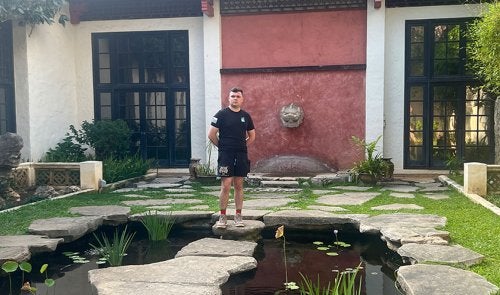
I didn’t want to just get a degree to get a degree. I wanted to get it for a purpose.
Full Throttle
How Airman Samuel Nucup Earned His Bachelor’s and Master’s Degrees in Just 2.5 Years.
For many active-duty service members, balancing military responsibilities with higher education can feel like a long-term goal that has to wait for the “right time.”
For Airman Samuel Nucup, waiting was never part of the plan.
At just 23 years old, Nucup has already completed both his bachelor’s and master’s degrees in cybersecurity through Norwich University Online while serving full-time in the U.S. Air Force. He accomplished both degrees in just two and a half years, often taking course loads far beyond what most students attempt.
“I was determined to make something of myself,” Nucup said.
That determination shaped nearly every decision he made after high school.
Choosing a Different Path
Nucup graduated during the height of the COVID-19 pandemic, a time when traditional college plans became uncertain for many students across the country. Without a clear path toward a conventional university experience, he decided to enlist in the Air Force immediately after high school.
At the same time, Nucup knew education would remain an important part of his long-term future. Coming from a military family, he had already seen firsthand how cybersecurity and national defense intersected professionally. His father, a Marine Corps veteran who now works in cybersecurity contracting, helped spark his interest in the field at an early age.
Growing up around computers and technology eventually led Nucup toward cybersecurity, intelligence, and information security, particularly the broader operational and organizational side of the field.
But for Nucup, education also represented something more personal.
After describing a difficult upbringing and limited educational opportunities earlier in life, he viewed both military service and higher education as opportunities to completely change his future trajectory.
“No one in my family had a master’s degree,” Nucup said. “I wanted to start learning more about my job in the Air Force and make something of my life.”
Finding Norwich
As soon as he arrived at his first duty station in Hawaii, Nucup wasted no time exploring his educational options. He visited the base education center, researched military-friendly universities, and spoke with family members about programs that aligned with both his military career and long-term goals.
Norwich University quickly stood out.
“Norwich has a great reputation in the military community,” Nucup said.
That military reputation mattered. So did the university’s flexibility and willingness to work with active-duty students balancing demanding operational schedules.
Nucup initially started slowly, taking one or two courses while adjusting to military life and online academics. But once he found his rhythm, he accelerated quickly.
With support from his advisors, Nucup eventually increased his workload to 18 credit hours per semester, completing both undergraduate and graduate coursework at an aggressive pace rarely attempted by online students.
“My advisors were great,” he said. “They let me start off slow with one to two classes, and then we kicked it up to 18 credit hours a semester and just full throttle until I was done.”
That phrase, “full throttle,” became an accurate description of his entire approach to education.
Balancing Active Duty and Accelerated Academics
Completing two degrees in two and a half years while serving on active duty required discipline, structure, and sacrifice.
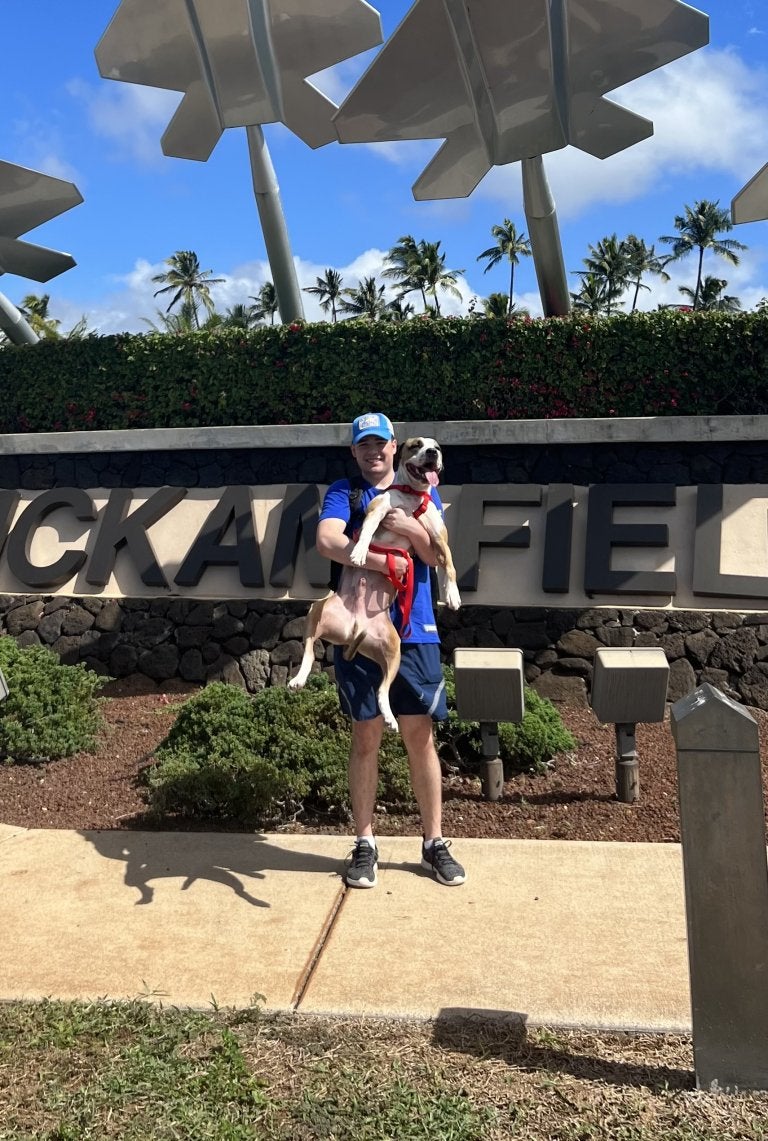
Nucup often spent eight to ten hours at work before returning home to complete another six to eight hours of coursework nearly every night. Weekends frequently became opportunities to catch up on assignments, projects, and discussion posts.
“I just full-fledged went through it and enjoyed it,” he said.
Although the workload was intense, Nucup found that many of the cybersecurity concepts covered in class aligned closely with his work in the Air Force, making the coursework feel practical and immediately relevant.
That relevance helped maintain momentum even during difficult stretches.
At times, military exercises and temporary duty assignments forced him away from coursework entirely. During those periods, he relied heavily on communication with professors, many of whom worked closely with him to accommodate operational requirements and shifting schedules.
“The professors were great,” Nucup said. “I would ask for a couple weeks extension on things and they said, ‘Of course.’”
Even with that support, the pace required sacrifices.
“I think my biggest challenge was setting aside some of the things that other 20-year-olds do,” he said.
Social activities, hobbies, and free time were often replaced with assignments, projects, and long nights of studying. But for Nucup, the tradeoff felt worthwhile.
“You get a fresh-faced 18-year-old coming into the military, and they just want to goof off,” he said. “I wanted to do my job and more because I knew it would work out for me in the future.”
A Cybersecurity Education Built for Today’s Challenges
One of the things Nucup appreciated most about Norwich’s cybersecurity program was how closely the coursework reflected real-world cybersecurity issues and operational environments.
Rather than relying on outdated examples or abstract exercises, many assignments focused on current challenges organizations face in both the public and private sectors.
Projects frequently incorporated emerging topics such as artificial intelligence, risk mitigation strategies, mobile device security, and modern cybersecurity planning for organizations operating in increasingly digital environments.
“We were encouraged to incorporate AI both offensively and defensively into cybersecurity planning,” Nucup said. “That’s something that’s extremely relevant now.”
The curriculum also reinforced operational decision-making skills he now applies directly within his Air Force role. Courses focusing on risk assessment and mitigation strategies strengthened his ability to evaluate tactical and operational decisions in real-world scenarios.
“I thought the program was going to be only strategic-level thinking,” Nucup said. “But there was a lot more operational use there than I expected.”
Equally valuable were the discussions with classmates from across the military, government, and cybersecurity industries.

Many of his classmates were active-duty service members, officers, government professionals, or cybersecurity practitioners working in different sectors of the field. Those conversations expanded his understanding of cybersecurity beyond the specific mission set he experiences in the Air Force every day.
“It broadened my horizons for cybersecurity in general,” he said.
Support Beyond the Classroom
For Nucup, Norwich’s military-friendly environment extended far beyond flexible schedules and operational accommodations.
He consistently points to the university’s advising staff as one of the most important factors in his success.
“They really cared,” he said.
Whether helping build an accelerated degree plan, processing exceptions to policy, or simply checking in during stressful periods, Nucup said his advisors remained engaged and supportive throughout the entire process.
“They believed in me, and they helped me get there,” he said.
That level of support stood out even more after hearing stories from other online students attending different institutions.
“I didn’t want to just get a degree to get a degree,” Nucup said. “I wanted to get it for a purpose.”
Nucup also credits Norwich’s academic standards for making the experience meaningful. Despite the flexibility of the online format, he never felt like the coursework lacked rigor or accountability.
“It definitely wasn’t something where you could just submit low-quality work and move on,” he said.
That challenge mattered to him because the degree represented more than simply checking a professional box. It represented growth, credibility, and future opportunity.
More Than Cybersecurity
Although cybersecurity became the center of his academic journey, one of the experiences that impacted Nucup most came from outside the cybersecurity curriculum entirely.
Early in his time at Norwich, he took a philosophy course that challenged him to think more deeply about values, leadership, ethics, and personal responsibility.
The course forced him to reflect on the principles guiding both his military service and his personal life.
“It helped me understand not only my own values, but what values I bring to the Air Force,” Nucup said.
Those discussions gave him a stronger foundation for answering the leadership and ethical questions often raised throughout military service, while also reinforcing how closely Norwich’s institutional values aligned with his own.
“Having Norwich’s morals align with mine was incredible,” he said.
Looking Ahead
Now preparing for his next assignment, Nucup plans to continue building his military career while pursuing opportunities to become an Air Force officer through Officer Training School.
At the same time, his accelerated academic path has already opened additional doors beyond the military. Since completing his degrees, he has already begun receiving interest from contracting companies and organizations connected to the intelligence and cybersecurity sectors.
For younger service members considering higher education, Nucup strongly encourages them to start sooner rather than later.
He regularly pushes the junior Airmen he supervises to begin college courses and pursue degrees that will create long-term opportunities for themselves both inside and outside the military.
And when it comes to cybersecurity specifically, he believes the field has become too important to ignore.
“Everything now relies on the cybersecurity infrastructure we have,” Nucup said.
For Nucup, education became more than a professional milestone. It became a way to accelerate opportunities, strengthen his future, and prove to himself what was possible through discipline and determination.