Chris Lencioni
Hearing other people’s perspectives is where the real learning takes place.
Teaching Beyond the Textbook: How Chris Lencioni Is Bringing Military History into the Classroom
As a middle school social studies teacher and coach, he is constantly trying to find ways to make history feel real to students who are still figuring out how they see the world. Some days that means teaching historical content. Other days it means teaching perspective, empathy, leadership, or resilience.
For Lencioni, those lessons have always started with people.
Growing up, history was never something distant or abstract. His grandfathers served in World War II in both the European and Pacific theaters, and their stories became some of his earliest introductions to the realities behind major historical events. Combined with stories from family members who lived through the Great Depression, history quickly became something deeply personal.
“I’ve always grown up around history,” Lencioni said.
That interest only deepened over time.
By the time he reached college at North Central College, he already knew he wanted to study history professionally. Years later, after establishing himself as a teacher, coach, husband, and father of two, he found himself returning to that same passion through the Master of Arts in Military History program at Norwich University.
Although he is still early in the program, the experience is already reshaping the way he thinks about teaching, leadership, and the role history plays both inside and outside the classroom.
Returning to School After 16 Years
For Lencioni, graduate school was never a question of if. It was a question of when.
After completing his undergraduate degree in 2010, he focused on building stability first. He wanted to establish himself professionally, earn tenure within his school district, and create balance for his growing family before returning to school.
This year, all of those pieces finally aligned.
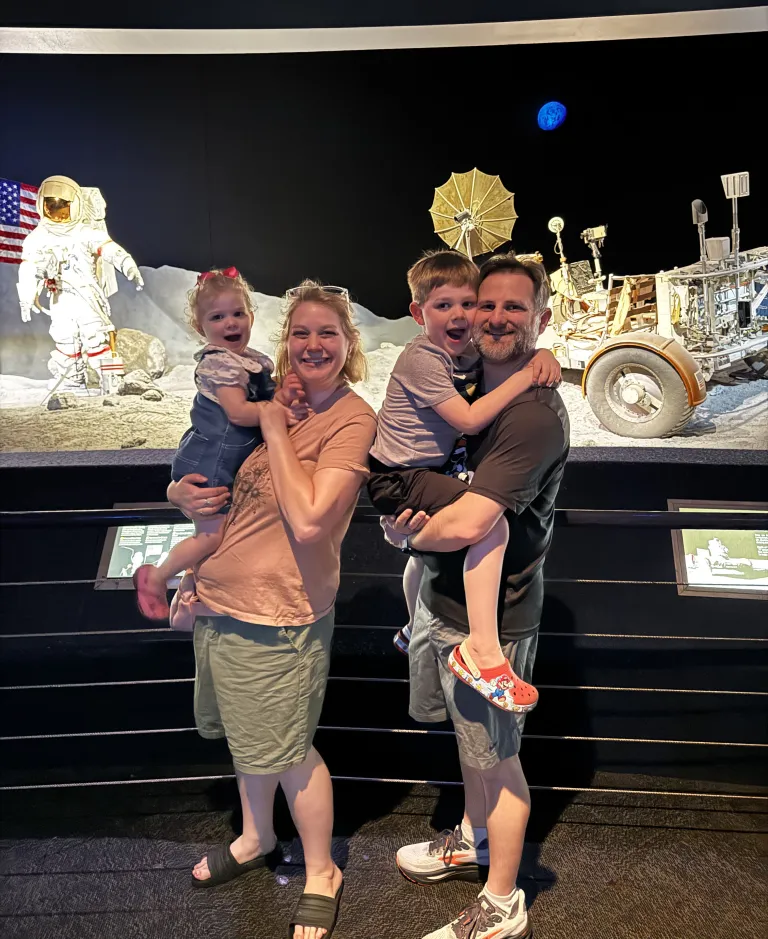
At the same time, Lencioni had already been hearing about Norwich for years through coworkers at the First Division Museum, where he also works part time. Several museum employees had completed graduate programs through Norwich and consistently spoke highly of both the academics and the overall experience.
That combination of recommendations, flexibility, and military-focused coursework immediately stood out.
“There aren’t a whole lot of online military history programs out there,” Lencioni said.
For someone balancing full-time teaching, coaching multiple sports, parenting young children, and working outside the classroom, relocating for graduate school was never realistic. The online format made it possible to pursue a graduate degree without stepping away from the life and career he had already built.
Studying History in a Different Way
Lencioni recently completed his first course in the program, a historiography class focused on how historians interpret, analyze, and construct history itself.
The experience immediately felt different from his undergraduate education.
Rather than focusing solely on historical content or traditional research papers, the course emphasized source analysis, interpretation, and critical examination of how historical narratives are formed. For Lencioni, it introduced an entirely new layer of historical thinking that he had not deeply explored before.
More importantly, he quickly realized those concepts translated directly into his own classroom.
While teaching middle school social studies during the same semester, he found himself naturally incorporating ideas from Norwich into discussions and lessons with his students. The way he approached sources, analysis, and classroom conversations began shifting almost immediately.
For Lencioni, that immediate application reinforced one of the biggest reasons he pursued graduate education in the first place: becoming a better educator.
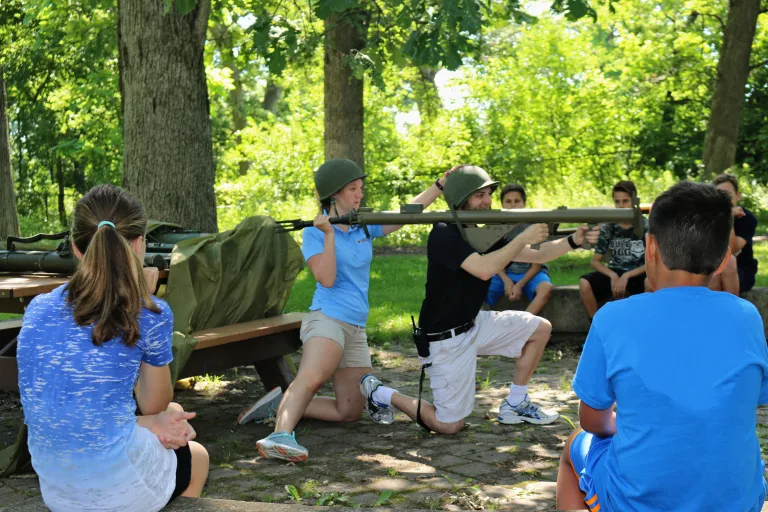
Leadership Lessons Through Military History
Although military history often focuses heavily on famous generals and large-scale campaigns, Lencioni finds himself increasingly drawn toward smaller-unit leadership and human decision-making.
As he begins thinking about his eventual capstone project, he is considering focusing on junior officers during World War II and examining why some became effective leaders while others struggled.
That interest is deeply connected to his own work as both a teacher and coach.
Whether leading a classroom, coaching a team, or eventually moving into school administration, Lencioni believes many of the same leadership principles apply regardless of profession.
“How do you gain the trust of the people you’re leading?” he said. “How do you take their talents and make them work for the group?”
Those are questions he thinks about constantly.
Rather than studying leadership only from a theoretical perspective, Lencioni sees military history as a way to examine leadership under pressure, uncertainty, and extreme circumstances. The lessons may emerge from wartime environments, but he believes they remain relevant far beyond the battlefield.
That broader perspective has become one of the most meaningful aspects of the program.
Learning Alongside Veterans and Service Members
One of the experiences that surprised Lencioni most was how much he valued learning alongside military professionals, veterans, and students from different backgrounds.
Coming from a civilian teaching environment, he was not accustomed to being surrounded by so many people with direct military experience. In a single Norwich course, he interacted with more veterans and service members than he had encountered during his entire undergraduate experience.
For someone studying military history, those perspectives added depth that could not be replicated through textbooks alone.
“That was probably one of the coolest parts of the class,” Lencioni said.
The conversations reinforced something he already emphasizes with his own students: meaningful learning often happens when people challenge each other’s assumptions, share perspectives, and engage openly with different experiences.
“Hearing other people’s perspectives is where the real learning takes place,” he said.
For Lencioni, Norwich’s military-connected environment became one of the program’s biggest strengths.
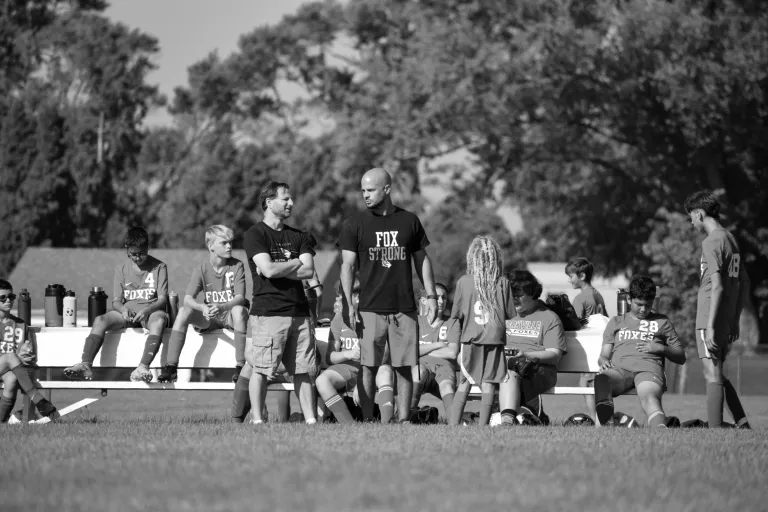
Why Military History Matters
Working daily with teenagers has also shaped how Lencioni thinks about the broader importance of studying history.
For him, military history is not about glorifying war or memorizing dates and battles. It is about helping students understand sacrifice, hardship, resilience, and the experiences that shaped previous generations.
He believes one of the most important responsibilities educators have is helping students develop empathy and perspective.
“I want my students to understand what people went through before us,” Lencioni said.
That perspective extends far beyond military conflict. Whether discussing economic hardship, labor movements, war, or social change, Lencioni wants students to recognize that history is ultimately about people navigating difficult circumstances.
In many ways, that philosophy explains why military history continues resonating so strongly with him personally and professionally.
It provides perspective.
Building Toward the Future
Although he is only beginning the program, Lencioni already sees Norwich as an important part of his long-term professional development.
He hopes to eventually move into educational leadership roles such as assistant principal or principal, and he believes studying leadership through military history will help shape the way he approaches those future responsibilities.
At the same time, he appreciates that Norwich’s structure makes graduate education manageable alongside the realities of professional and family life.
From an educator’s perspective, he believes the accelerated one-course-at-a-time format is intentionally designed in a way that supports working adults.
The flexibility has been especially important while balancing teaching, coaching, parenting, and graduate coursework simultaneously.
Still, for Lencioni, the value of the program ultimately comes back to something much simpler.
Learning.
Even after 16 years away from higher education, he still sees himself first and foremost as a student of history, leadership, and people.
And now, through Norwich, he has found a way to bring all three together both for himself and for the students he teaches every day.