Justin Baum
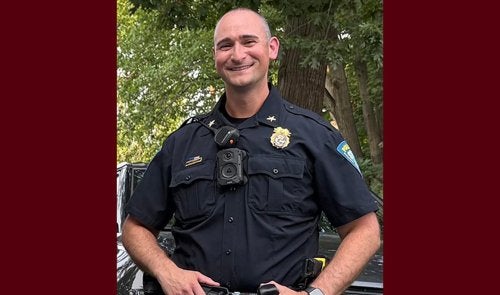
My goal is to have the credibility with a degree in leadership, so when I’m at meetings with peers or training courses, I can say, ‘I know this area well, and here’s why.
Building Better Leaders
How Justin Baum Is Using Norwich to Influence the Future of Law Enforcement.
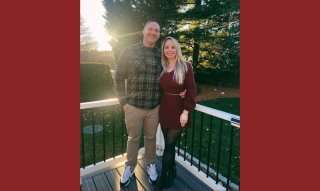
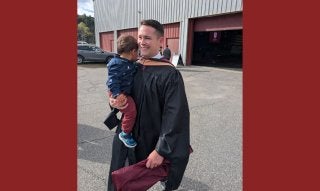
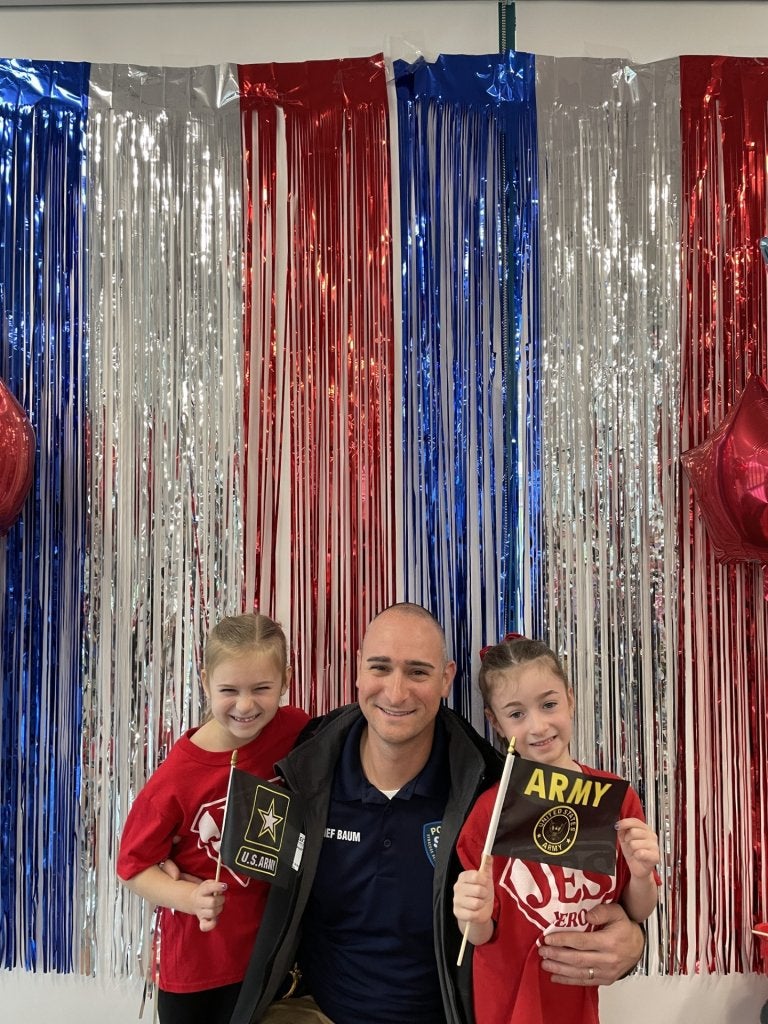
Army veteran, police chief, business owner, husband, father, and now graduate student, Justin Baum understands leadership from multiple perspectives. Over the course of his military and law enforcement career, he has led teams in combat environments, managed complex organizations, and watched firsthand how leadership can shape the culture and effectiveness of an institution.
Now enrolled in Norwich University Online’s Master of Science in Leadership program, Baum is pursuing graduate education with a clear purpose in mind: helping develop stronger leaders within the law enforcement profession.
“I saw a lot of things that can be done better,” Baum said. “I’m not going to wait for someone else to do it. I need to be part of this movement.”
That mindset has guided Baum throughout a career built on service.
From ROTC to Public Service
Baum attended the Rochester Institute of Technology, where he studied criminal justice while participating in Army ROTC. After graduating in 2009, he commissioned into the U.S. Army as an active-duty Military Police officer and was stationed at Fort Drum, New York.

During his four years on active duty, Baum served in multiple leadership roles, including assistant S1, rear detachment commander, military police platoon leader, and assistant battalion S3. From 2010 to 2011, he deployed to Kandahar City, Afghanistan, serving both as a platoon leader and senior police advisor to Afghan police forces within his district.
Although his active-duty service concluded after fulfilling his service obligation, his commitment to public service continued. Baum transitioned directly into law enforcement, working across several police departments before steadily advancing through the ranks. Today, he serves as Chief of Police at Syracuse Hancock International Airport.
Alongside his law enforcement career, Baum also built and operates a business specializing in antiques, collectibles, and historical artifacts, including military and law enforcement history items. Over the years, he has helped preserve artifacts connected to American military history and place them into the hands of collectors, museums, and institutions that value their significance.
Despite the demands of leading a growing airport police department, operating a business, and raising two young children with his wife, Baum felt compelled to continue growing professionally.
That decision ultimately led him back into the classroom.
Recognizing a Leadership Gap
For Baum, pursuing a graduate degree was never simply about earning another credential. The decision was shaped by years of observing both effective and ineffective leadership throughout his military and law enforcement career.
“Coming from the military, you see a lot of good leadership, you see bad leadership,” Baum said. “And I expected to see a lot of good leadership in law enforcement, but unfortunately, I think some of law enforcement leaders don’t know what they don’t know.”
Baum believes many agencies face challenges created by rapid promotion systems and limited formal leadership development opportunities. As experienced officers move into management positions, organizations can find themselves led by individuals who may have operational experience but limited education or mentorship in leadership itself.
“There’s a lot of managers,” Baum said. “There’s not as many leaders.”
Rather than criticizing the issue from the sidelines, Baum wanted to become part of the solution. He began searching for a program that would help him better understand leadership at both the organizational and human level.
His goal was not simply to learn theory, but to identify ways to improve organizational culture, influence people effectively, and help shape the next generation of law enforcement professionals.
“My ultimate goal with this program is to bring that back to the local community I have here and work with local law enforcement partners to figure out what we can do better to prepare the next generation of leaders,” Baum said. “To make this profession a place where people want to stay and not want to leave early because of bad interactions.”
Finding the Right Program
When Baum began researching graduate programs, he approached the process carefully. Like many working professionals, he wanted a degree that aligned directly with his professional goals and personal interests.
He quickly discovered that many leadership programs leaned heavily toward business administration, economics, or finance-focused coursework. While Baum understood the importance of those subjects, they were not what he hoped to gain from graduate school.
Instead, he wanted a program centered on leadership itself: how organizations function, how people are influenced, and how institutional culture can be improved from within.
Norwich University Online immediately stood apart.
Baum was initially drawn to Norwich because of its military heritage and longstanding connection to leadership development.
“What better place to learn leadership than from the time-tested experiences of the military?” he said.
As he explored the curriculum further, the program’s concentration in law enforcement leadership reinforced that decision. The coursework aligned closely with the challenges he faced daily in his own profession, allowing him to connect classroom concepts directly to real-world leadership situations.
Rather than learning abstract theories disconnected from his career, Baum saw an opportunity to apply his professional experiences directly within the academic environment while simultaneously gaining new tools and perspectives.
Returning to the Classroom
Although Baum was confident in his professional background, returning to graduate-level academics after nearly 17 years created understandable hesitation.
“I hadn’t done college work in almost 17 years,” Baum said. “So I was thinking, what am I doing getting back into this?”
At the same time, he was balancing an already demanding schedule. In addition to serving as a police chief and operating a business, Baum was also managing family responsibilities at home.
Finding a program flexible enough to accommodate those competing priorities was critical.
Once classes began, however, he quickly settled into a rhythm that worked for both his professional and personal life. The structure of Norwich’s online courses allowed him to work ahead when necessary, manage his schedule proactively, and maintain momentum even during periods of travel or increased responsibilities at work.
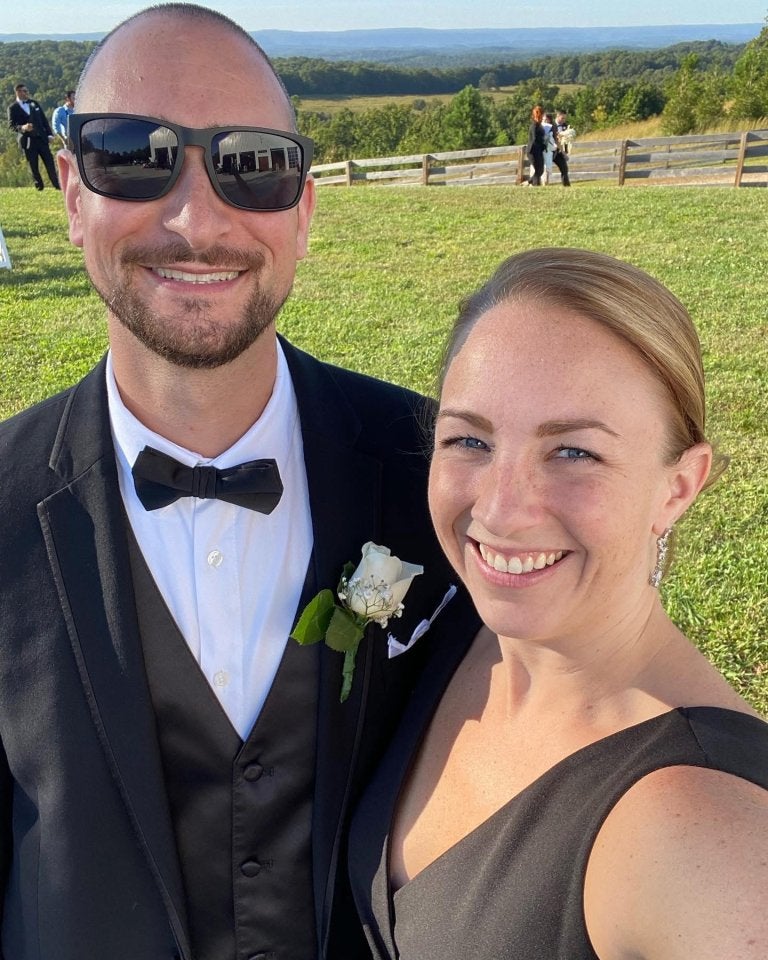
“My wife at one point asked me, ‘Are you even doing that course right now?’” Baum recalled with a laugh. “I said, ‘Yeah, I’ve just got this schedule where I’m doing it on my time where it’s not affecting anything else in my life.’”
Baum also credits the support and collaboration within his cohort for helping ease the transition back into graduate education. Early on, conversations with classmates who had already completed previous Norwich courses helped reinforce that the workload, while rigorous, was manageable with discipline and consistency.
Like many adult learners returning to school later in life, Baum initially questioned whether he could balance the academic demands with the realities of work and family. Over time, however, he realized the challenge was far more achievable than he had anticipated.
Applying Leadership Lessons in Real Time
Even in the early stages of the program, Baum has already begun applying concepts from the classroom directly within his organization.
Early coursework validated several leadership practices he already utilized while also introducing alternative approaches for handling difficult conversations, organizational processes, and workplace challenges.
One assignment challenged him to closely evaluate a process within his department and identify opportunities for improvement through the lens of leadership theory and organizational development. The experience encouraged him to approach workplace issues more intentionally and strategically.
“The course empowered me to have some difficult conversations with people at different levels that maybe I had been putting off,” Baum said. “It gave some of the tips and techniques that made that possible.”
For Baum, one of the most valuable aspects of the program has been the quality and diversity of perspectives within his cohort. His classmates include military officers, senior enlisted leaders, private-sector executives, and national security professionals from across the country.
The result has been an environment filled with practical discussions grounded in real-world leadership experience.
“There’s no judgment there,” Baum said. “People understand where you’re coming from. They live that military or first responder mindset.”
That shared understanding created an atmosphere where students could openly discuss leadership challenges, difficult experiences, and organizational issues without hesitation.
For Baum, that level of trust and mutual respect has become one of the defining characteristics of the Norwich experience.
Looking Ahead
As Baum continues through the program, he sees graduate education as more than personal development. He views it as preparation to help influence the future direction of law enforcement leadership.
“There’s been a lot more emphasis in New York State recently on leadership development,” Baum said. “My goal is to have the credibility with a degree in leadership, so when I’m at meetings with peers or training courses, I can say, ‘I know this area well, and here’s why...’”
He hopes to help reshape how agencies think about mentorship, organizational culture, and long-term leadership development while encouraging future leaders to pursue education intentionally rather than relying solely on experience.
For service members, veterans, and working professionals considering graduate education, Baum encourages them not to overthink the decision.
“I thought I knew a lot about leadership from my roles,” he said. “And just one class into it, I’ve already learned so much.”
He believes many prospective students underestimate their ability to succeed in graduate school, particularly those balancing careers, families, and other responsibilities.
“People need to come to terms with the importance of just taking the step and doing it,” Baum said.
For Baum, taking that step has already reinforced something he believed throughout his military and professional career: strong leadership is not accidental. It is developed intentionally through experience, education, reflection, and a willingness to continue learning long after others stop.