Valerie Cranmer
I think more people should understand how history teaches you really important skills.
The Marine Scholar: Valerie Cranmer's Journey Through Military History
From Marine Corps intelligence operations to doctoral research and a postdoctoral appointment at Columbia University, Norwich alumna Valerie Cranmer, MMH, '21 has built a career connecting military experience with historical scholarship.
Valerie Cranmer's professional journey has taken her across the Pacific, through military headquarters in Afghanistan and New Zealand, into the intelligence community, and ultimately to Columbia University, where she now researches and teaches modern Japanese history. Throughout those experiences, three interests have consistently shaped her direction: history, military affairs, and Japan.
Today, Cranmer is a postdoctoral researcher at Columbia University's Weatherhead East Asian Institute and a Marine Corps Reserve officer serving as a joint historian. Her career reflects an unusual combination of operational military experience, intelligence analysis, and historical scholarship. Although these disciplines have different responsibilities and methods, Cranmer has found opportunities to apply her knowledge across all three.
Her path into academia was anything but conventional. After nearly a decade of military service, Cranmer enrolled in Norwich University's online Master of Arts in Military History program in 2019. The decision would help her build the academic credentials necessary to pursue a longstanding ambition: becoming a university professor.
An Early Interest in History and Japan
Growing up in Springfield, Virginia, just outside Washington, D.C., Cranmer was surrounded by opportunities to explore history. Her father had a strong interest in the subject, and her parents regularly took the family to museums, Civil War battlefields, Revolutionary War sites, and other historical landmarks throughout the region. These experiences helped establish an appreciation for the past that would eventually influence her professional and academic interests.
Her introduction to Japan came through music. As a member of a youth orchestra, Cranmer participated in an exchange program with a Japanese youth orchestra, giving her opportunities to travel to Japan and host a Japanese family in her own home. Her high school also offered Japanese language instruction, allowing her to continue developing an interest in the country and its culture.
When it came time to select a college, Cranmer sought an institution where she could continue studying Japanese while participating in collegiate athletics. She chose Colorado College, where she studied history and Asian studies and played Division III lacrosse.
Although she had long considered becoming a university professor, Cranmer also wanted to understand the military through firsthand experience. Rather than study military institutions exclusively from an academic perspective, she decided to pursue a commission in the United States Marine Corps.
That decision began a professional journey that would take her far beyond the classroom.
A Military Career Across the Globe
After completing Marine Corps officer training, Cranmer became a signals intelligence and electronic warfare officer. Her first duty station was with 3rd Radio Battalion in Hawaii, although operational requirements soon took her elsewhere.
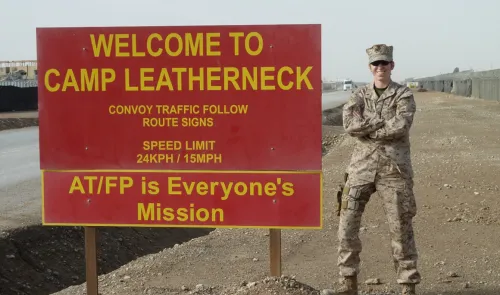
During the drawdown of American forces in Afghanistan, she deployed to support the movement of equipment and personnel out of the country. Initially assigned to logistical operations, she was subsequently transferred to Kandahar to fill a planning position normally designated for a much more senior officer. There, she helped develop planning materials assessing the feasibility of the established withdrawal schedule.
The assignment required her to adapt quickly to unfamiliar responsibilities and work alongside personnel from other military branches. It was an early example of the flexibility that would characterize much of her career.
Following Afghanistan, Cranmer returned to Hawaii before leading a Marine detachment working alongside the U.S. Army's 501st Military Intelligence Brigade in South Korea. She later transferred to Okinawa, Japan, where she served in intelligence planning positions supporting naval operations and multinational military cooperation.
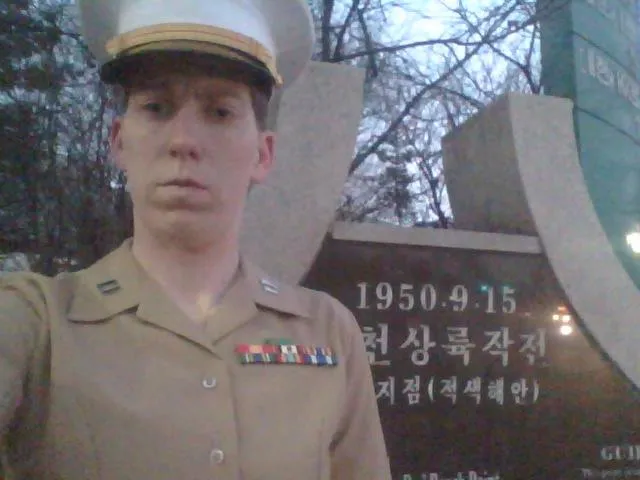
Her assignments brought her into regular contact with Japanese and South Korean military personnel, allowing her to apply her longstanding regional interests in an operational environment. She eventually served as a company commander and intelligence plans officer, supporting major exercises and operational planning in the Indo-Pacific.
After eight years of active-duty Marine Corps service, Cranmer and her spouse decided they wanted to continue living overseas. That decision led to an unusual opportunity with the New Zealand Defence Force, where she served for two years at its headquarters in Wellington.
Her responsibilities included helping develop a joint electronic warfare program and supporting strategic intelligence planning. When the COVID-19 pandemic disrupted military operations worldwide, Cranmer became involved in planning efforts to maintain operational continuity during New Zealand's national lockdowns.
The experience added another perspective to her understanding of military organizations and international partnerships. Working within a foreign military provided opportunities to observe how another nation approached intelligence planning, organizational challenges, and national security responsibilities.
Cranmer subsequently returned to the United States, working for the National Reconnaissance Office on the integration of satellite-derived intelligence capabilities into military exercises. She later supported U.S. European Command as a contractor, continuing her work at the intersection of intelligence, technology, and military planning. Throughout these assignments, her interest in academic history remained.
Finding the Right Path at Norwich
By 2019, Cranmer had accumulated substantial military and international experience, but she recognized that pursuing a university teaching career would require additional academic qualifications.
Initially, she considered earning a master's degree in education through Auburn University. As she explored that option and sought recommendations from former professors, she received advice that prompted her to reconsider.
One of her academic contacts, Dennis Showalter, suggested Norwich University's Master of Arts in Military History program. Cranmer began examining whether a specialized graduate degree in history would better support her goal of entering academia.
She realized that a degree focused on military history could build directly upon her undergraduate education and professional experience while preparing her for doctoral research. The structure of Norwich's program was another important consideration. Its concentrated course format resembled the academic model she had experienced at Colorado College, making it familiar and appealing.
At the time, Cranmer was serving with the New Zealand Defence Force. Norwich's online format allowed her to pursue graduate education while continuing her professional responsibilities on the other side of the world.
The program's asynchronous coursework proved particularly valuable given the substantial time difference between New Zealand and the United States. Although she acknowledged that online discussions depend heavily on the engagement of individual students, she found the format manageable and compatible with her circumstances.
The pandemic also created an unexpected period in which she could devote additional attention to her studies. When New Zealand entered lockdown, a temporary interruption in her regular duties gave her time to concentrate more extensively on graduate coursework.
For Cranmer, however, the most significant benefit of Norwich was academic rather than logistical.
The degree provided a formal scholarly foundation for knowledge she had previously developed through military service and professional experience. That distinction would become especially important when she began pursuing doctoral opportunities.
Building a Foundation for Doctoral Research
After completing her master's degree at Norwich in 2021, Cranmer continued exploring opportunities to pursue a PhD. While working at the National Reconnaissance Office, she applied to the University of St Andrews in Scotland and was accepted into its doctoral program in modern history.
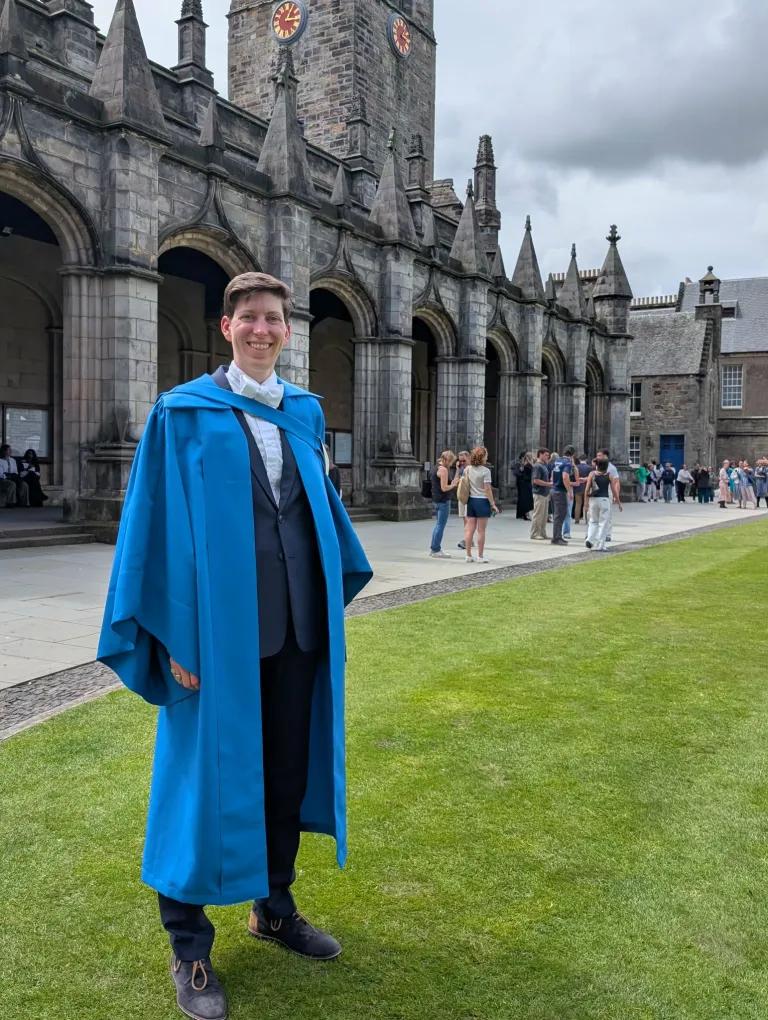
Before beginning her studies, she attended an intensive Japanese language program at Middlebury to strengthen her language proficiency for historical research.
Cranmer explained that the academic pathway in the United Kingdom differs from many American doctoral programs. Rather than completing a master's degree as part of the doctoral process, students generally enter with relevant graduate preparation and focus more directly on their research.
Her Norwich education was particularly useful in this environment because it demonstrated that her understanding of military history extended beyond professional experience.
"Focusing in on military history for my master's was helpful because, again, it kind of legitimized that background piece of it in an academic sense," Cranmer explained.
When discussing her research plans with prospective doctoral advisers, she could point to both her operational military experience and her graduate education as evidence of her familiarity with military institutions. This allowed her to concentrate on developing the regional and historical research expertise necessary for her chosen subject.
Cranmer credits that combination with helping her navigate a nontraditional path into academia. Her experience demonstrates how graduate education can provide a bridge between professional expertise and advanced scholarly research, particularly for individuals whose careers have developed outside conventional academic settings.
Researching a Difficult Chapter of Military History
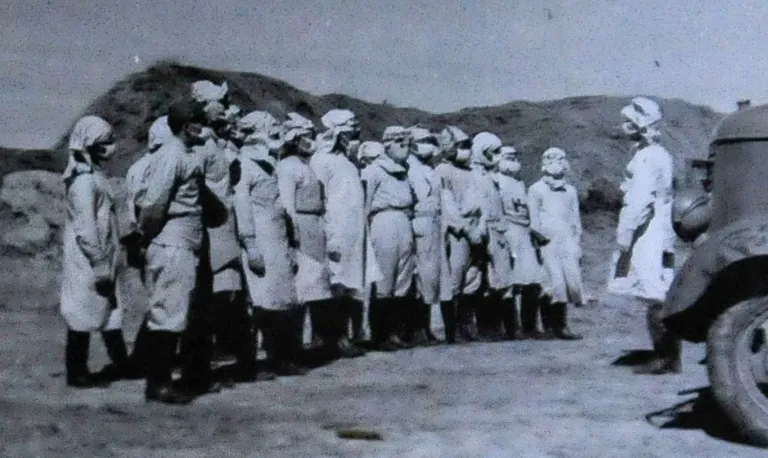
At the University of St Andrews, Cranmer focused her doctoral research on the Imperial Japanese Army's Epidemic Prevention and Water Purification Organization, a system of military medical units established to address disease prevention and access to safe drinking water.
The organization developed in response to the logistical and medical challenges facing Japanese forces operating across extensive territories. Its responsibilities involved preventing disease and supporting military operations, but elements of the organization also became associated with some of the most notorious atrocities of the Second World War.
Among them was Unit 731, which conducted lethal human experimentation in Japanese-occupied Manchuria.
Cranmer's research examines the broader institutional structure in which these units operated, including why they were established, how their responsibilities evolved, and the circumstances under which some became involved in human experimentation.
Her work approaches the subject through questions of military organization, institutional decision-making, and the conditions that enabled serious abuses.
The research resulted in her doctoral dissertation, Enabling Abuse: The Imperial Japanese Army's Epidemic Prevention and Water Purification Organisation and Its Place in Global Military History. She has also published scholarly work examining the postwar trials of medical war crimes associated with Unit 731.
Cranmer completed her PhD in 2025 and subsequently joined Columbia University's Weatherhead East Asian Institute as a postdoctoral researcher in September 2026.
At Columbia, she teaches modern Japanese history while continuing to develop her dissertation research into a scholarly book. Her current work involves examining additional historical evidence, refining her arguments, and expanding areas of research that could not be fully explored within the limits of a doctoral dissertation.
The opportunity represents a significant development in a career that began with an ambition to teach history and evolved through years of military and intelligence experience.
Understanding the Military Through History
Cranmer's experience has given her a perspective on the relationship between historical scholarship and military service. Having worked within military organizations in several countries and studied their development across different historical periods, she recognizes the importance of questioning assumptions about how military institutions operate.
She believes one of the most valuable contributions of historical study is the ability to examine familiar institutions critically and understand how their practices have changed over time.
"It can be really easy, I think, as a military member to kind of be like, oh, because I've had this experience, therefore I understand military," she explained.
Cranmer noted that the armed forces of the Second World War operated in circumstances vastly different from those facing modern service members. Understanding those distinctions requires careful research rather than relying exclusively on personal experience or popular interpretations of military history.
For her, studying history develops the critical reading, analysis, and research skills necessary to evaluate complex information. Those capabilities are relevant across many professional fields, particularly those involving intelligence, national security, and strategic decision-making.
Her own career illustrates that versatility. She has worked in operational planning, produced intelligence assessments, supported multinational military activities, and conducted original historical research. Although the responsibilities have varied considerably, each has required her to evaluate evidence, understand institutional context, and communicate complex findings.
Today, Cranmer continues serving in the Marine Corps Reserve as a joint historian, contributing to the documentation and analysis of military operations while pursuing her academic research at Columbia.
The Value of a Norwich Education
Looking back on her graduate education, Cranmer remains confident in her decision to attend Norwich. She believes the university provided a strong academic experience while allowing her to maintain an international professional career that would have made traditional campus attendance difficult.
She also encourages prospective students to consider the broader value of historical study, particularly the critical thinking and analytical skills it develops.
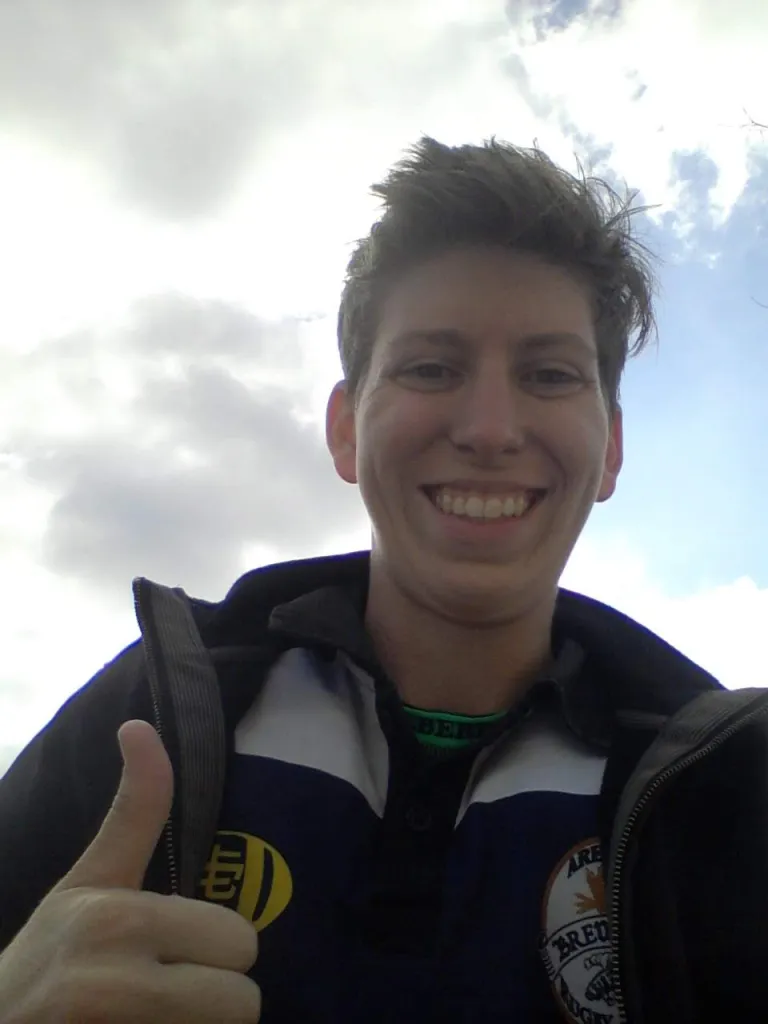
"I think more people should understand how history teaches you really important skills," she said, emphasizing critical reading and the importance of examining complicated subjects through rigorous scholarship.
For military professionals, she believes graduate education in history can offer an opportunity to reconsider familiar assumptions and develop a more comprehensive understanding of the institutions in which they serve. For students pursuing academic careers, it can also provide the specialized foundation necessary for more advanced research.
Cranmer's own experience demonstrates both possibilities. She entered Norwich with years of military service, extensive international experience, and a longstanding interest in history. She graduated with an academic qualification that helped strengthen her preparation for doctoral research and supported her eventual transition into university teaching.
Her journey has since brought together the interests that first developed during her childhood in Virginia: history, Japan, and military affairs. As she continues researching modern Japanese military history, teaching at Columbia, and serving as a Marine Corps Reserve officer, Cranmer remains committed to examining the past with the rigor necessary to better understand military institutions and their place in the world.
For someone who once envisioned a career as a university professor, the opportunity to pursue that ambition while drawing upon a lifetime of international and military experience represents a meaningful convergence of professional service and academic scholarship.