Dan Phoenix
Norwich provided the ability to sit down at a blank screen and fill it from sources, ideas, and arguments.
The Historian Behind the Mission: Preserving the Legacy of the U.S. Air Force
Nearly two decades after earning his master's degree in military history, Dan Phoenix '09 continues to demonstrate the value of historical knowledge through a career dedicated to preserving the heritage of the Department of the Air Force.
For Dan Phoenix, history has never been something confined to textbooks or museum exhibits. It is a record of people, decisions, sacrifices, and experiences that continue to influence the present. As Deputy Director for Heritage for the Department of the Air Force, Phoenix has built a career around ensuring those stories are preserved, understood, and available to inform future generations.
His journey has taken him through national parks, museums, military installations, and operational deployments around the world. Along the way, he has helped document Air Force operations, preserve institutional knowledge, and modernize how historical information is managed. Nearly two decades ago, however, Phoenix was a young historian searching for a way to turn his passion into a sustainable career. An opportunity to pursue graduate education at Norwich University would become an important part of that journey.
Finding a Career in History
Phoenix's fascination with history began in an unlikely place: a fourth-grade classroom presentation about medieval heraldry. A visiting presenter explained the meaning and construction of coats of arms, sparking an interest that followed Phoenix home. When his father showed him decorative family coats of arms, Phoenix became captivated by the symbols, traditions, and stories they represented.
Although he later discovered those particular family artifacts were not historically authentic, the fascination they inspired was genuine. He began reading extensively about heraldry and other specialized historical subjects, developing an enthusiasm that would eventually shape his professional life.
After earning his bachelor's degree in history from Arizona State University, Phoenix knew he wanted to work directly with history rather than pursue a traditional teaching career. He explored opportunities in historical interpretation and tourism before securing seasonal positions with the National Park Service. His assignments included Lewis and Clark National Historical Park in Oregon and Mount Rainier National Park in Washington. He also worked at the United States Holocaust Memorial Museum in Washington, D.C.
These experiences reinforced his desire to make history accessible and meaningful to the public. However, establishing a permanent career in the field proved challenging. After marrying, Phoenix and his wife relocated to rural California to pursue her career. With limited professional opportunities nearby and the nearest universities several hours away, he began considering graduate education as a way to strengthen his qualifications. That search led him to Norwich University.
Choosing Norwich: A Reputation Worth Trusting
In 2007, online graduate education was still establishing its reputation. Phoenix approached the prospect cautiously, concerned about whether an online degree would carry the academic credibility necessary to advance his career. Norwich stood apart because it offered something he considered essential: the established reputation of a university with a long history of academic and military education.
For Phoenix, that institutional credibility mattered as much as the opportunity to study remotely. He wanted a degree he could carry confidently throughout his professional life. Once enrolled in Norwich's Master of Arts in Military History program, he found additional reassurance in the academic expertise of the faculty and course developers. Their credentials and connections within the military history profession reinforced his confidence in the education he was receiving.
The coursework also demanded sustained reading, research, analysis, and writing. Those expectations would prove especially valuable as his career developed. Phoenix credits the repeated practice of organizing complex information and communicating it clearly with strengthening one of the most important skills in his profession.
"Norwich provided the ability to sit down at a blank screen and fill it from sources, ideas, and arguments," he recalled.
The ability to confront an unfamiliar historical subject, evaluate available evidence, and produce a coherent narrative became a regular part of his work. Years after graduation, Phoenix continues to recognize the practical value of that academic preparation.
An Unexpected Call and a New Direction
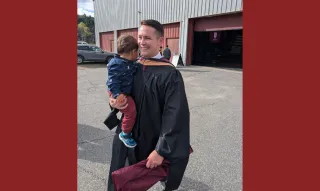
Shortly after completing his degree in 2009, Phoenix traveled to Norwich's Vermont campus for his residency and graduation. His father accompanied him on the journey east, and afterward Phoenix and his wife began the long drive home to California.
While traveling through southern Indiana, his phone rang. The call came from Little Rock Air Force Base in Arkansas, where the Air Force was considering him for a historian position. Phoenix accepted the opportunity and joined the Air Force History Program as a civilian historian with the 19th Airlift Wing.
What began as a promising professional opening developed into a career spanning more than 17 years. Over time, he advanced through positions of increasing responsibility, including assignments at Ramstein Air Base in Germany and Air Force Global
Strike Command at Barksdale Air Force Base in Louisiana.
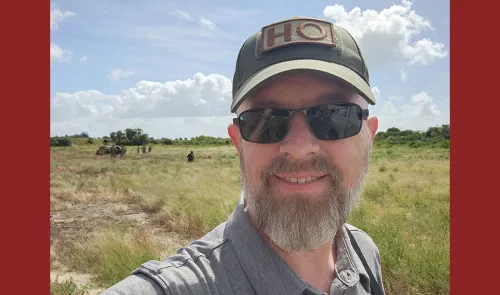
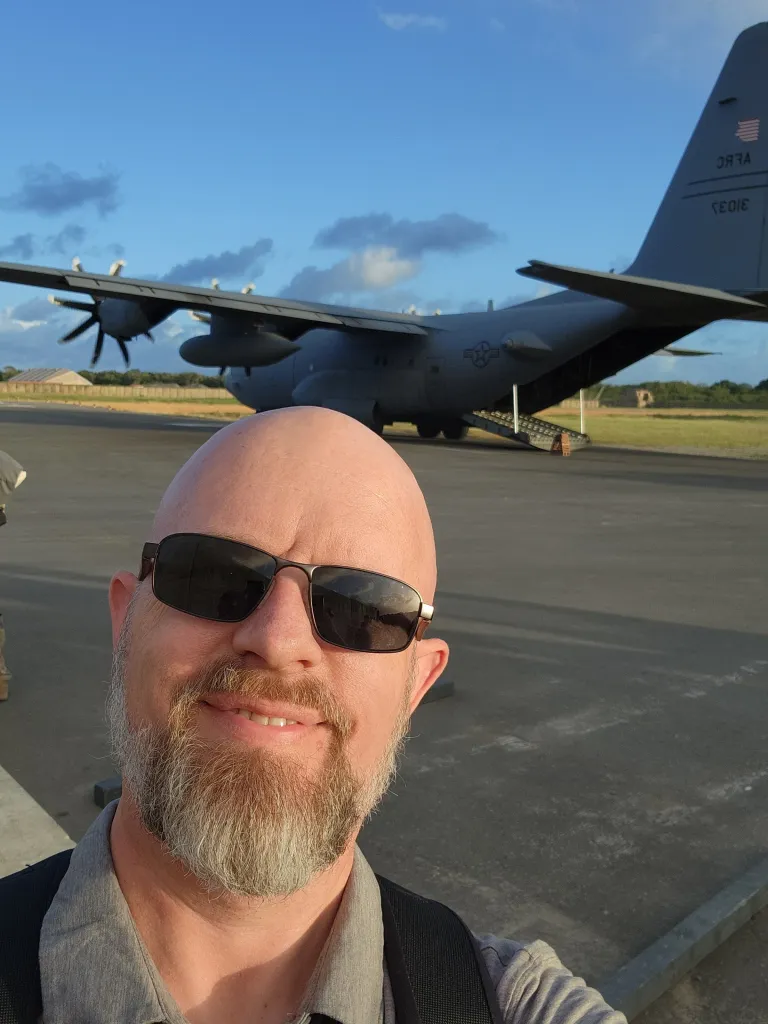
His work also brought him directly into military operations. As a civilian historian, Phoenix deployed to Kyrgyzstan, Afghanistan, Germany, and Africa. These assignments challenged the common assumption that historians work at a distance from military operations.
Air Force historians document unit activities, collect operational records, preserve firsthand accounts, and organize information that can support future planning and decision-making. Their responsibilities place them close to the missions and personnel whose experiences will become part of the historical record.
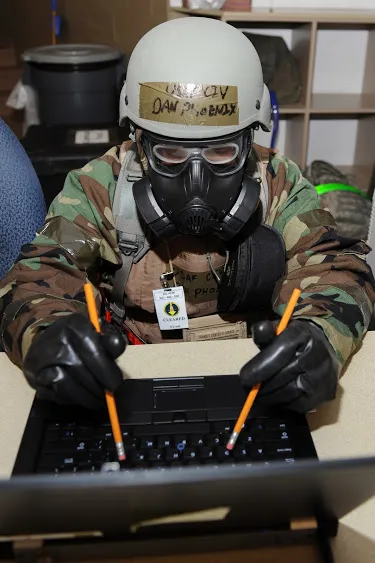
During his deployment to Kyrgyzstan, Phoenix compiled records of community service projects undertaken by Air Force personnel, transforming historical documentation into measurable information that leadership could use to communicate the unit's contributions to its host nation. Years later, while supporting operations in Africa, he documented the withdrawal of American forces from Niger, preserving records of a complex logistical operation as events unfolded.
For Phoenix, these experiences demonstrate that historical work has immediate operational relevance. The records historians preserve today can help military leaders understand past decisions, evaluate previous operations, and prepare for future challenges.
Preserving Heritage in a Changing World
Phoenix's career eventually brought him to Washington, D.C., where he took on responsibilities involving the digital transformation of the Department of the Air Force History Program. As a digital historian, he worked to modernize how the Air Force manages and uses its extensive historical collections, addressing the challenges of preserving and organizing information in an increasingly digital environment.
His professional responsibilities have continued to expand. In May 2026, Phoenix became Deputy Director for Heritage, a senior position supporting the preservation and stewardship of Air Force history. His career reflects the evolving role of the modern historian, where historical expertise intersects with information management, emerging technologies, institutional leadership, and the ability to make enormous collections of records useful to the organizations they serve.
Phoenix has also continued pursuing professional education, completing graduate certificates through the Naval Postgraduate School and the Air Force Institute of Technology before earning a Master of Strategic Studies from the Air War College in 2026. That commitment to lifelong learning has allowed him to develop expertise beyond traditional historical scholarship, particularly in areas related to nuclear policy, command and control, and national security. Through those experiences, he has demonstrated the value of combining specialized historical knowledge with an understanding of the broader military enterprise.
When History Becomes Personal
Among the many experiences Phoenix has collected throughout his career, one stands out for the way it revealed the deep personal connections preserved within military history. Early in his Air Force career, while serving as historian for the 19th Airlift Wing at Little Rock Air Force Base, Phoenix hosted a reunion for the wing's alumni association.
At the reunion dinner, he and his wife shared a table with several distinguished guests, including association leaders, the wing chaplain, and a veteran who had endured the fall of the Philippines and the long years as a POW afterward. During the evening, the survivor recounted the story of Chaplain Joseph Verbis LaFleur, a Catholic priest from Opelousas, Louisiana, who served with the 19th Bombardment Group when Japanese forces attacked Clark Field in the Philippines in 1941.
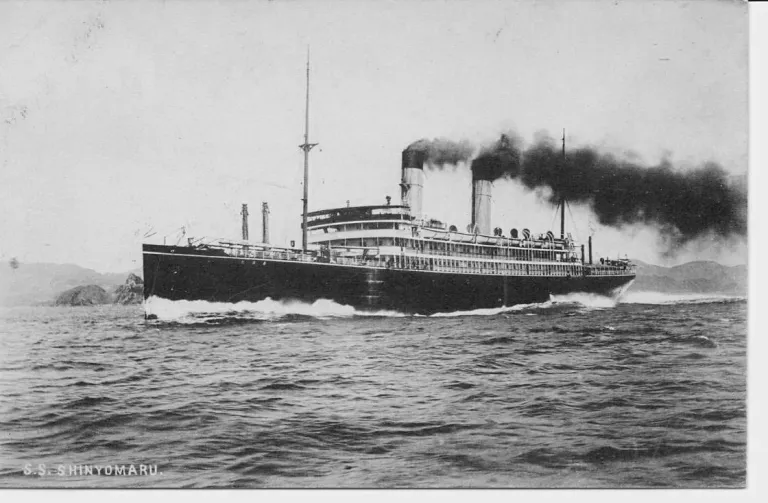
LaFleur endured the brutal conditions of captivity during World War II, repeatedly risking his life to assist fellow prisoners. He ultimately died aboard the Japanese prison transport ship Shinyo Maru in 1944. According to the account shared that evening, he was last seen helping other prisoners escape the hold of the sinking ship.
As the story unfolded, the chaplain recognized an extraordinary connection. The 19th Airlift Wing, where he now served as command chaplain, was descended from the same World War II unit in which his father had served. LaFleur's example during captivity had influenced his father's path toward Catholicism, helping shape the religious foundation that would eventually influence his own life and vocation. Decades after the war, the son of a man inspired by Chaplain LaFleur was serving as chaplain of the successor organization.
For Phoenix, witnessing that realization was an unforgettable moment. It brought together the personal, spiritual, and institutional dimensions of military history in a way no written account alone could fully capture. The experience reinforced something that has guided his professional life: preserving history means preserving the human connections that give institutions their identity and traditions their meaning.
The Lasting Value of a Norwich Education
Seventeen years after earning his master's degree, Phoenix continues to encounter Norwich graduates throughout the Air Force historical community. Although those shared connections have not necessarily translated into direct career opportunities, they have created an immediate sense of common ground with fellow alumni. More importantly, Phoenix sees his Norwich education as a strong foundation for the practical demands of his profession.
He believes the university's military history program prepared him particularly well for the Air Force's approach to historical work, which emphasizes the collection, organization, interpretation, and communication of information in support of operational requirements. His experience also illustrates the value of Norwich's institutional reputation. When Phoenix selected the university, he wanted assurance that his degree would remain credible long after graduation. Nearly two decades later, he continues to regard that decision positively.
The academic discipline he developed has accompanied him through deployments, leadership assignments, and subsequent graduate education. His professional journey demonstrates how the skills developed through historical study can remain relevant even as responsibilities and technologies change.
For prospective students considering graduate education in history, Phoenix's experience offers a perspective on the possibilities available beyond traditional academic careers. His work has brought him close to military operations, connected him with remarkable individuals, and given him opportunities to preserve stories that might otherwise disappear.
The reunion dinner in Little Rock remains a particularly meaningful example. For Phoenix, witnessing the connection between Chaplain LaFleur's wartime service and the life of a fellow Airman illustrated how historical events can influence individuals and institutions across generations. It is precisely that kind of connection that makes preserving history so important, and that continues to give purpose to the career he began building nearly two decades ago.